
When it comes to protecting your home from water damage, having a reliable gutter system is essential. Gutters play a critical role in managing rainwater runoff, directing water away from your roofline, siding, and foundation. A properly functioning gutter system helps prevent foundation damage, soil erosion, and moisture buildup around your home that can lead to costly repairs.
With several types of gutters available today, many homeowners wonder which option provides the best protection and long-term performance. Two of the most common choices are seamless gutters and sectional gutters (often found at home improvement stores like Home Depot, Menards, and Lowe’s). While both systems are designed to move water away from your home, they differ significantly in installation, maintenance requirements, and overall durability.
In this guide, we’ll compare seamless gutters vs sectional gutters, explain the advantages and limitations of each system, and help you determine which gutter solution is the best fit for protecting your home.
What Are Seamless Gutters?
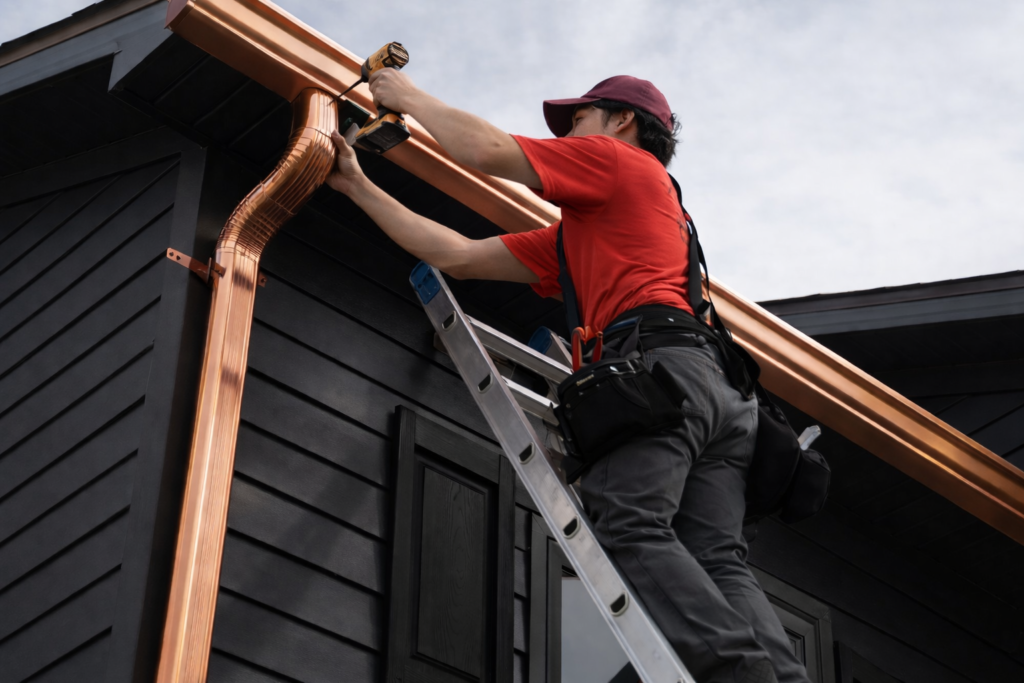
Seamless gutters are a type of gutter system that is custom fabricated to match the exact measurements of your home. Unlike sectional gutters, which come in pre-cut pieces that must be connected together, seamless gutters are produced on-site using a specialized gutter machine that forms the gutter from a continuous roll of material, typically aluminum.
Because the system is created in one continuous piece, seamless gutters have far fewer joints and connection points compared to traditional sectional gutter systems. This continuous design helps reduce the risk of leaks, improves overall rainwater drainage, and creates a cleaner, more professional appearance along your home’s roofline.
By being cut precisely to fit your home, seamless gutter systems provide a more reliable solution for managing rainwater runoff and protecting your home from potential water damage.
Pros of Seamless Gutters:
- Fewer Seams Mean Fewer Leaks and Maintenance Issues
Because seamless gutters are manufactured as a continuous piece, they have far fewer joints compared to sectional gutters. With fewer seams along the gutter system, there are fewer areas where leaks, debris buildup, and gutter separation can occur. This helps improve overall rainwater drainage and reduces the need for frequent maintenance. - Low Maintenance and Long-Term Reliability
With fewer joints throughout the gutter system, seamless gutters are far less likely to trap leaves, twigs, and debris that can lead to clogs. Because there are fewer connection points compared to sectional gutters, debris has fewer places to collect and block rainwater drainage. As a result, seamless gutter systems are typically easier to maintain, simpler to clean, and require less frequent gutter maintenance over time. The continuous design helps water move more efficiently through the gutters and downspouts while minimizing areas where debris can build up and cause gutter clogs. - Superior Durability and Long-Term Performance
Seamless gutters are made from high-quality materials like aluminum, copper, or steel, which are durable and rust-resistant. This makes them a great long-term investment as they tend to last much longer than sectional gutters. - Custom Fit
Seamless gutters are custom-formed on-site to fit your home’s exact dimensions, which means they can be installed to match your roofline perfectly. This provides a more precise fit, better drainage, and fewer issues with water overflow. - Better Curb Appeal
Since seamless gutters are custom-installed and have no visible seams, they tend to look cleaner and more polished, improving the overall curb appeal of your home.
- Higher Initial Cost
The main downside of seamless gutters is their higher initial cost. Because they require custom fabrication and professional installation, they tend to be more expensive than sectional gutters. However, the higher cost is often offset by the long-term savings on maintenance and repairs. - Requires Professional Installation
Seamless gutters must be professionally installed, which means you can’t just pick up a kit and install them yourself. Installation requires specialized equipment and skill, adding to the overall cost. - Limited DIY Option
Unlike sectional gutters, which can be installed by DIY homeowners, seamless gutters are a professional-only option, making them less ideal for homeowners on a tight budget who want to save on labor costs.
What Are Sectional Gutters?
Sectional gutters are pre-cut pieces of gutter that are sold in fixed lengths (usually 10 or 20 feet). These gutters are then connected together using connectors and sealants. Sectional gutters are typically made from materials like aluminum, vinyl, or steel, and are readily available at big box stores like Home Depot, Menards, or Lowe’s.
Pros of Sectional Gutters:
- Lower Upfront Cost
Sectional gutters are generally less expensive than seamless gutters. They can be purchased at most home improvement stores and typically require no special fabrication or custom work. - DIY-Friendly Installation
Because sectional gutters come in pre-cut lengths, they are perfect for DIY homeowners. With basic tools, you can install these gutters yourself, which can save money on labor costs. Many home improvement stores even offer gutter kits with everything you need for installation. - Easier to Replace
If a section of gutter becomes damaged, it is relatively easy to replace just that section without having to replace the entire system. This makes repairs and replacements less expensive and more manageable. - More Material Choices
Sectional gutters come in a variety of materials, including vinyl, aluminum, and steel, giving homeowners more options to match their home’s aesthetic and budget.
Cons of Sectional Gutters:
- More Joints and Seams
The biggest drawback of sectional gutters is that they have multiple seams where the sections are joined. Over time, these joints can weaken, leading to leaks, clogs, and water damage. The more seams your system has, the higher the risk of water leakage. - Higher Maintenance
The seams in sectional gutters can trap debris and dirt, which increases the likelihood of clogs and requires more frequent cleaning and maintenance. Clogged gutters can cause water to overflow, which can damage your home’s foundation and siding. - Less Durable Over Time
Sectional gutters tend to be more prone to rust, warping, and cracking, especially if they are made from vinyl or thinner aluminum. Over time, they may need more frequent repairs or replacements compared to seamless gutters. - Aesthetic Issues
The visible seams in sectional gutters can sometimes look less polished, which may detract from the overall appearance of your home. In some cases, the connectors or joints may become visible over time, impacting the curb appeal.
Seamless Gutters vs. Sectional Gutters: A Comparison
| Feature | Seamless Gutters | Sectional Gutters |
|---|---|---|
| Initial Cost | Higher due to professional installation and customization | Lower upfront cost; DIY installation options |
| Maintenance | Low maintenance; fewer clogs and leaks | Requires more frequent cleaning and maintenance |
| Durability | Long-lasting, resistant to rust and corrosion | Prone to rust, warping, and leaks over time |
| Installation | Professional installation required | DIY installation is possible |
| Aesthetic Appeal | Clean, seamless appearance | Visible seams and joints can detract from curb appeal – many describe as “ugly” |
| Water Flow and Drainage | Excellent; fewer opportunities for clogs or overflow | Can struggle with clogs at seams, leading to overflow |
| Repairs | More difficult to repair; requires professional help | Easier to repair; can replace individual sections |
Which Gutter System Is Best for Your Home?
Choose Seamless Gutters if:
- You’re looking for long-term durability and low maintenance.
- You want a custom, professional installation that will fit your home’s specific needs.
- You’re willing to invest more upfront for better performance and fewer repairs in the future.
- You want gutters that match your homes exterior perfectly.
Choose Sectional Gutters if:
- You’re on a tight budget and need a more affordable option but has a history of known issues like leaks, warping, and materials that fade in color.
- You prefer a DIY installation to save on labor costs.
- You don’t mind doing more frequent maintenance and repairs over time.
- You don’t mind getting no warranty on the workmanship.
Conclusion
Both seamless gutters and sectional gutters can serve a purpose depending on your home’s needs and your budget. However, when it comes to long-term durability, performance, and reduced maintenance, seamless gutters are often the preferred choice for many homeowners. Because they are custom fabricated on-site with fewer joints and seams, seamless gutter systems are less likely to leak, sag, or collect debris over time.
While sectional gutters may offer a lower upfront cost and are sometimes chosen for DIY installation, they typically require more maintenance due to the multiple seams and connection points where leaks and clogs can develop.
Regardless of which system you choose, keeping your gutter system properly installed and maintained is essential for protecting your home from water damage, foundation issues, and roof drainage problems.
If you’re unsure which option is best for your home, the team at Supreme Seamless Gutters LLC is here to help. We provide professional guidance, seamless gutter installation, and gutter system solutions designed to perform in Minnesota’s changing weather conditions. Contact Supreme Seamless Gutters LLC today to schedule a free gutter estimate and learn which gutter system will best protect your home.