
A gutter system that is too small often doesn’t fail quietly. Instead, it begins to overflow at the corners, allowing rainwater runoff to spill over the edges and collect in areas where it can cause problems. This excess water can lead to muddy landscaping, peeling exterior paint, soil erosion, and even basement moisture issues, leaving homeowners wondering why problems persist even though they already have gutters installed.
If you’re asking “what size gutters do I need for my home?”, you’re already thinking about one of the most important factors in protecting your property. Choosing the correct gutter size ensures your gutter system can handle the amount of roof runoff your home produces, allowing rainwater to move quickly and efficiently away from the roofline, foundation, and landscaping before it can cause water damage.
What Size Gutters Do You Need? Start With Your Home’s Drainage Needs
Gutter sizing is really about capacity and how well your gutter system can handle rainwater runoff from your roof. During a heavy rainstorm, your roofline becomes a collection surface, and every roof slope, valley, and downspout must work together to move that water away from the home efficiently. The size of the gutter—most commonly 5-inch gutters or 6-inch gutters for residential homes—is just one part of a complete rainwater drainage system. Proper performance also depends on downspout size, the number of downspouts, their placement, and how the water is directed away from your foundation.
A helpful rule of thumb for homeowners is this: choosing a gutter size without considering the roof layout, roof pitch, and overall water volume is essentially guessing. While guessing might work on smaller homes with simple rooflines, larger homes, steep roofs, long gutter runs, and large roof valleys require a properly sized gutter system to handle higher volumes of rainwater. Without the correct gutter capacity, homeowners can experience gutter overflow, water pooling, and costly water damage, often leading to repairs or upgrades later on.
5-Inch vs 6-Inch Gutters: Which Size Is Best for Your Home?
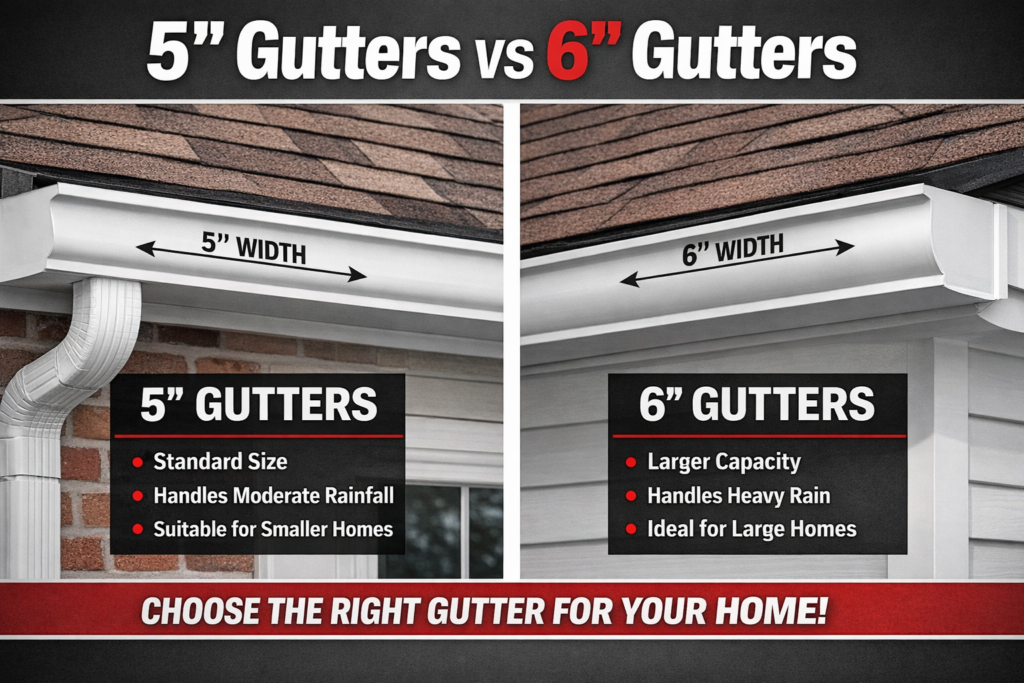
Most residential homes in Minnesota are typically installed with 5-inch K-style gutters, which are the most common size used in seamless gutter systems today. These gutters are cost-effective, widely available, and perform well on many standard rooflines. For homes with moderate roof slopes and average rainwater runoff, 5-inch seamless gutters are often sufficient to move water away from the home and protect the foundation and landscaping.
However, many homeowners choose to upgrade to 6-inch K-style gutters for increased water capacity and improved rainwater drainage. A 6-inch gutter system can handle a larger volume of rainwater runoff before reaching the edge of the gutter and overflowing. This added capacity is especially important for homes with steep roof pitches, large roof valleys, or long roof sections that direct a high volume of water into one area of the gutter system.
There isn’t a single gutter size that works best for every home. The decision often comes down to the layout of your roofline, the amount of rainwater runoff, and the level of protection you want from your gutter system. While 6-inch seamless gutters may cost slightly more and appear slightly larger on the fascia, they can significantly reduce the risk of gutter overflow during heavy rainstorms.
If you’ve ever seen rainwater pouring over the front of your gutters during a storm, that’s often a sign the gutter system is undersized or unable to handle the volume of water coming off the roof.
At Supreme Seamless Gutters LLC, we evaluate your roof layout, water drainage needs, and home size to recommend the right seamless gutter size for your property, helping ensure your gutter system performs reliably through Minnesota’s heavy rain, snowmelt, and seasonal weather conditions.
4 Key Factors That Determine the Right Gutter Size for Your Home
Roof Size and Drainage Area
One of the most important factors when determining gutter size is the total roof drainage area. Larger homes with bigger roof sections collect more rainwater, which means the gutter system must be able to handle a greater volume of water during storms.
If a long gutter run along the back of your home collects rainwater runoff from a large portion of the roofline, it may require a larger gutter size or additional downspouts to handle the increased water volume. Even if other sections of the gutter system perform well with standard 5-inch gutters, areas that receive heavy roof drainage may benefit from 6-inch seamless gutters or strategically placed downspouts to prevent gutter overflow and improve overall rainwater drainage.
Roof Pitch (Slope)
Steeper roof pitches can significantly affect how quickly rainwater runoff reaches the gutter system. Even if two homes have the same roof square footage, a steep roof slope allows water to move faster toward the gutters, increasing the amount of water flow entering the system at one time. This higher peak runoff volume can sometimes cause gutter overflow, even when the gutters appear to be properly installed.
In many cases, the issue is not improper gutter installation, but rather that the existing gutter size cannot handle the increased rainwater capacity during heavy storms. Homes with steep rooflines often benefit from larger seamless gutters or additional downspouts to improve rainwater drainage and prevent water from spilling over the edge of the gutter system during peak rainfall.
Roof Shape: Valleys, Long Roof Runs, and Concentrated Water Flow
The shape of your roof plays a major role in determining the correct gutter size for your home. Features like roof valleys, long roof runs, and areas where multiple roof sections drain into one point can concentrate large amounts of rainwater runoff into a single section of the gutter system. When this happens, standard 5-inch gutters may struggle to handle the increased water volume, especially during heavy rainstorms.
Homes with large roof valleys or long sections of roof draining into one gutter area often benefit from 6-inch seamless gutters or additional downspouts to improve rainwater drainage. Properly sizing the gutter system in these areas helps prevent gutter overflow, protects the foundation, and ensures water is safely directed away from the home.
Rainfall Volume and Storm Intensity in Your Area
The amount of local rainfall and the intensity of rainstorms in your area play a major role in determining the correct gutter size for your home. In regions like Minnesota, homes can experience heavy rainstorms, seasonal downpours, and significant snowmelt, all of which increase the amount of rainwater runoff entering the gutter system.
If your gutters are too small to handle these peak conditions, rainwater can quickly overflow the front of the gutter and spill near the foundation or landscaping. Installing properly sized seamless gutters, and ensuring the correct number of downspouts, helps improve rainwater drainage and ensures your gutter system can handle the volume of water produced during heavy storms.
When 5-Inch Gutters Are the Right Choice for Your Home
If your home has a simple roofline, a moderate roof pitch, and an adequate number of properly placed downspouts, 5-inch gutters can often provide sufficient rainwater drainage. Many ranch-style homes, smaller colonial homes, and properties without large roof valleys are well suited for 5-inch seamless gutters, as these systems can effectively manage rainwater runoff without experiencing gutter overflow.
However, the key factor is that the gutter system must remain clean and properly pitched. Even the correctly sized gutter system can fail if it becomes clogged with leaves, debris, and shingle granules, begins to sag, or is installed with the wrong gutter slope. If you notice water overflowing from your gutters and the system is filled with debris, the issue may not be gutter sizing, but rather a gutter maintenance problem that needs to be addressed to restore proper rainwater flow.
When 6-Inch Gutters Are the Better Choice for Your Home
If you’re deciding between 5-inch gutters and 6-inch gutters, it’s important to pay close attention to areas where rainwater runoff tends to concentrate on your roofline. Sections of the roof that direct large volumes of water into one part of the gutter system can easily overwhelm smaller gutters during heavy rainstorms.
In many cases, 6-inch seamless gutters are a better choice for homes with steep roof pitches, pronounced roof valleys, or large roof planes that drain into a single gutter run. These larger gutters provide increased water capacity, helping reduce the risk of gutter overflow during intense rainfall. Upgrading to 6-inch gutters is also worth considering if you’ve experienced repeated overflow at gutter corners or along long sections of gutter, even after performing regular gutter cleaning.
Another common scenario occurs when homeowners are already planning to install new seamless gutters. In these situations, it can be a smart long-term decision to upgrade to 6-inch gutters in specific high-flow areas rather than installing standard 5-inch gutters everywhere and later discovering that certain sections of the gutter system needed additional drainage capacity.
Why Downspout Size and Placement Matter as Much as Gutter Size
Installing a larger gutter without adequate downspout capacity is similar to widening a funnel while still draining it through the same narrow opening. In many cases, complaints about gutter overflow are actually caused by undersized or insufficient downspouts, not the gutter size itself.
Many homes are installed with 2×3 downspouts, but in regions like Minnesota, these smaller downspouts often struggle to handle the volume of rainwater runoff, heavy storms, and snowmelt that roofs produce throughout the year. For this reason, 3×4 downspouts are typically a better choice because they can move significantly more rainwater away from the gutter system and help prevent overflow during heavy rainfall.
Downspout placement is just as important as size. If downspouts are only located at the ends of a long gutter run, water must travel the entire length of the gutter system before it can exit. Adding an additional downspout near the center of a long run or closer to a roof valley can reduce the water level inside the gutter and improve overall rainwater drainage performance.
At Supreme Seamless Gutters LLC, we recommend properly sized 3×4 downspouts and strategic downspout placement to ensure your seamless gutter system can handle Minnesota’s heavy rain, seasonal storms, and snowmelt without experiencing gutter overflow or drainage issues.
Gutter Overflow vs Clogged Gutters: Understanding the Difference
Many homeowners are often told, “Your gutters overflow because they’re clogged.” In some cases, that’s true. However, it’s also common for a gutter system to experience problems because it is both partially clogged with debris and undersized for peak rainwater runoff during heavy storms.
A practical way to understand the difference is to look at when and where the gutter overflow occurs.
If gutter overflow happens only after weeks of leaves, seed pods, and debris buildup, then gutter cleaning and installing a reliable gutter guard system may solve the problem.
However, if gutters overflow even right after a cleaning, the issue may be related to gutter capacity or system layout. This can include problems such as undersized gutters, insufficient downspout size, poor downspout placement, or incorrect gutter pitch that prevents proper rainwater drainage.
If overflow occurs at one specific area, often beneath a roof valley or along a long gutter run, the solution may not require replacing the entire gutter system. In many cases, a targeted upgrade—such as installing 6-inch seamless gutters, adding an extra downspout, or improving drainage capacity in that section—can resolve the issue where the rainwater runoff is most concentrated.
Gutter Guards Help With Debris, Not Water Capacity
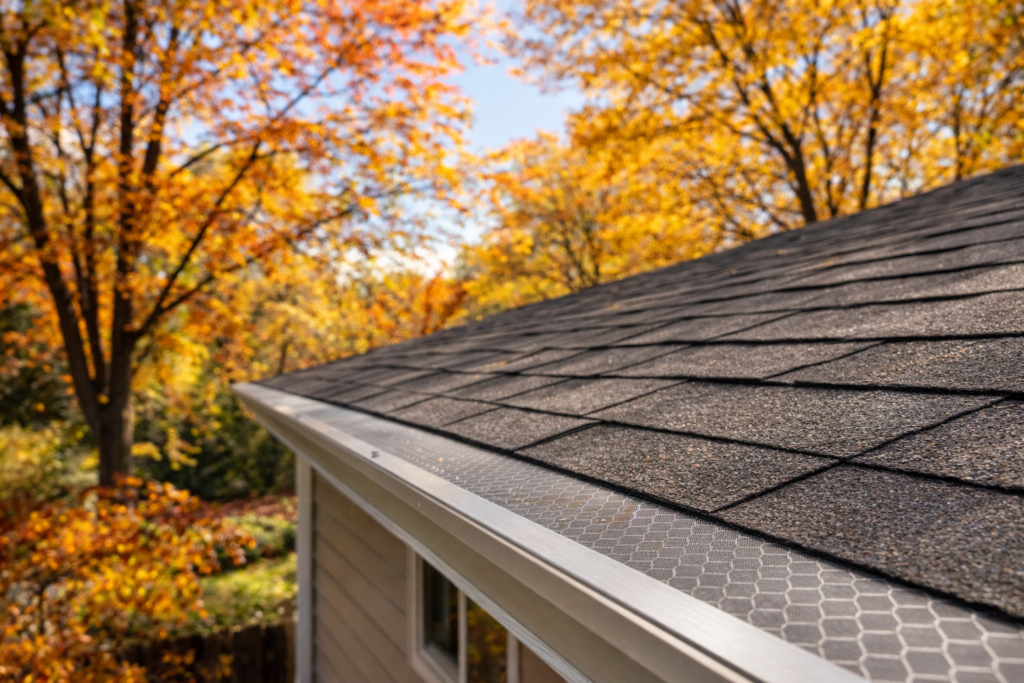
Leaf protection systems can be a valuable performance upgrade for your gutter system, but they are not a replacement for proper gutter sizing. A high-quality gutter guard helps keep leaves, twigs, and debris out of the gutters so rainwater can continue flowing the way the system was designed. This is especially helpful for homes located in wooded neighborhoods, where debris buildup can quickly lead to clogged gutters.
However, it’s important to understand one key detail: gutter guards do not increase gutter capacity. Instead, they help your gutter system maintain its full drainage capacity during seasons when leaves and debris would normally restrict rainwater flow. In other words, gutter protection systems help preserve performance—they don’t increase how much rainwater runoff the gutters can handle.
When choosing a gutter guard system, it’s important to look for a design that not only blocks debris but also helps support the structural integrity of the gutter system. Systems that reinforce the gutter channel can help maintain proper gutter alignment, which is essential for effective rainwater drainage.
How to Choose the Right Gutter Size Without Guessing
You don’t need to become a drainage engineer to choose the right gutter system for your home, but it is important to work with a professional gutter contractor who evaluates the entire rainwater drainage system and explains the recommendation clearly.
At Supreme Seamless Gutters LLC, a professional gutter contractor, takes the time to evaluate the full roofline layout and gutter system design before recommending the proper solution for your home. Rather than using a one-size-fits-all gutter installation, each recommendation is based on the specific rainwater runoff patterns and drainage needs of the property.
A proper gutter sizing recommendation should consider the high-volume runoff areas of your roof, including where roof valleys direct water, the length of each gutter run, the number and placement of downspouts, and how effectively the gutter system moves rainwater away from your foundation.
By evaluating the entire roof drainage system, Supreme Seamless Gutters LLC can recommend the correct seamless gutter size, proper downspout configuration, and overall gutter system design to ensure reliable rainwater drainage and long-term protection for your home.
Key Questions to Ask in a Seamless Gutter Estimate
You don’t need to interrogate your gutter installer, but asking a few clear questions during a gutter installation estimate can prevent most misunderstandings and help ensure your gutter system is designed to perform properly.
Start by asking whether the contractor recommends 5-inch gutters or 6-inch seamless gutters for your specific roofline, and why. A professional installer should be able to explain how your roof pitch, roof valleys, and rainwater runoff areas influence the best gutter size for your home.
Next, ask about the downspout size and how many downspouts are included in the installation. Proper downspout placement and capacity are just as important as the gutter size when it comes to managing rainwater drainage and preventing gutter overflow.
It’s also important to ask how the contractor plans to handle high-volume water areas, such as roof valleys or long gutter runs. These areas often require additional downspouts or larger gutter capacity to handle heavy rainwater runoff.
Finally, ask where the downspouts will discharge and whether the system includes downspout extensions or underground drainage to move water safely away from your foundation.
A trustworthy gutter contractor won’t avoid these questions—they’ll welcome them. The answers are what determine whether your seamless gutter system will perform properly during heavy rainstorms and seasonal weather.
A properly designed gutter system isn’t about simply installing bigger gutters everywhere. It’s about providing the right drainage capacity in the areas where your roofline produces the most runoff, so the next heavy rain is just weather—not a test your home has to fail.
If you’re looking for a professional seamless gutter installation or want help determining the right gutter size for your home, contact Supreme Seamless Gutters LLC for a free gutter estimate.
We proudly serve Rosemount, MN and surrounding communities with expert seamless gutter installation, gutter guards, and gutter system upgrades designed to handle Minnesota weather.